Mixed Martial Arts (MMA)
Striking and grappling combined. MMA combines striking and grappling under unified rules. The first UFC in 1993, the rules, weight classes, women's MMA and training basics.
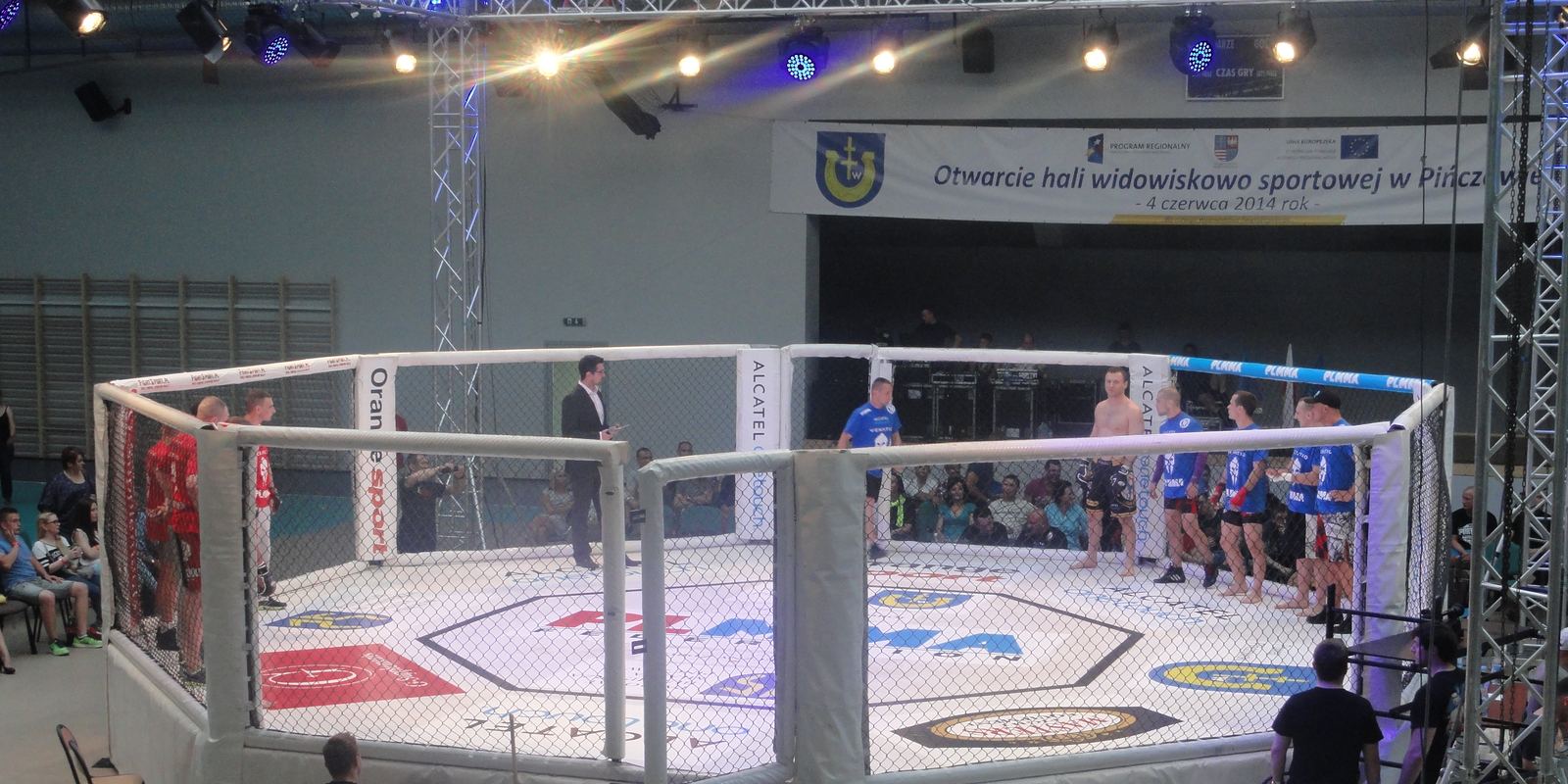
An MMA cage: Tyka17, CC BY-SA 4.0
Style versus style
People have long asked which martial art works best. The first Ultimate Fighting Championship, held in Denver on November 12, 1993, put a boxer, a sumo wrestler, a kickboxer and others in an eight-sided cage with very few rules. Royce Gracie, a slim Brazilian jiu-jitsu fighter, won by taking opponents down and submitting them, showing the importance of grappling.
Becoming a sport
Early events had almost no rules and faced heavy criticism. From 2000, athletic commissions in the US adopted the Unified Rules of Mixed Martial Arts, with weight classes, gloves, rounds and banned techniques such as headbutts, groin strikes and kicks to the head of a downed opponent. The sport grew into a global industry with promotions in many countries.
What fighters train
Modern MMA fighters train boxing or kickboxing for striking, wrestling for takedowns and defence, and Brazilian jiu-jitsu for submissions. Fights can be won by knockout, technical knockout when a referee stops the fight, submission, or a judges' decision. Women's MMA joined the UFC in 2013 and has produced major stars.
Watching MMA
A typical MMA bout moves through three phases: striking at distance, clinch fighting against the cage and grappling on the ground. Judges score each round on effective striking and grappling, aggression and control of the cage. If a fight looks like a stalemate on the ground, the referee may stand fighters up. Learning to recognise common submissions, such as the rear-naked choke, triangle and armbar, makes the grappling exchanges much more exciting to follow.
Training safely
Many MMA gyms offer fitness and beginner classes separate from fight teams. Wear a mouthguard, use gloves and shin guards in sparring, tap early in grappling and choose a gym with experienced coaches. Most members never compete; they train for fitness, skill and confidence.
Learn techniques only from a qualified instructor in a supervised class, with proper equipment and a partner who knows what to expect.
- An MMA cage: Tyka17, CC BY-SA 4.0
Text written by Strongest Power.