
Ranks
Belt Colours Compared: Judo, Karate, Taekwondo, BJJ
Coloured belts started with Jigoro Kano's dan system for judo in the 1880s. Every art, and often every federation or school, has its own colour order. These are common patterns, not universal rules.
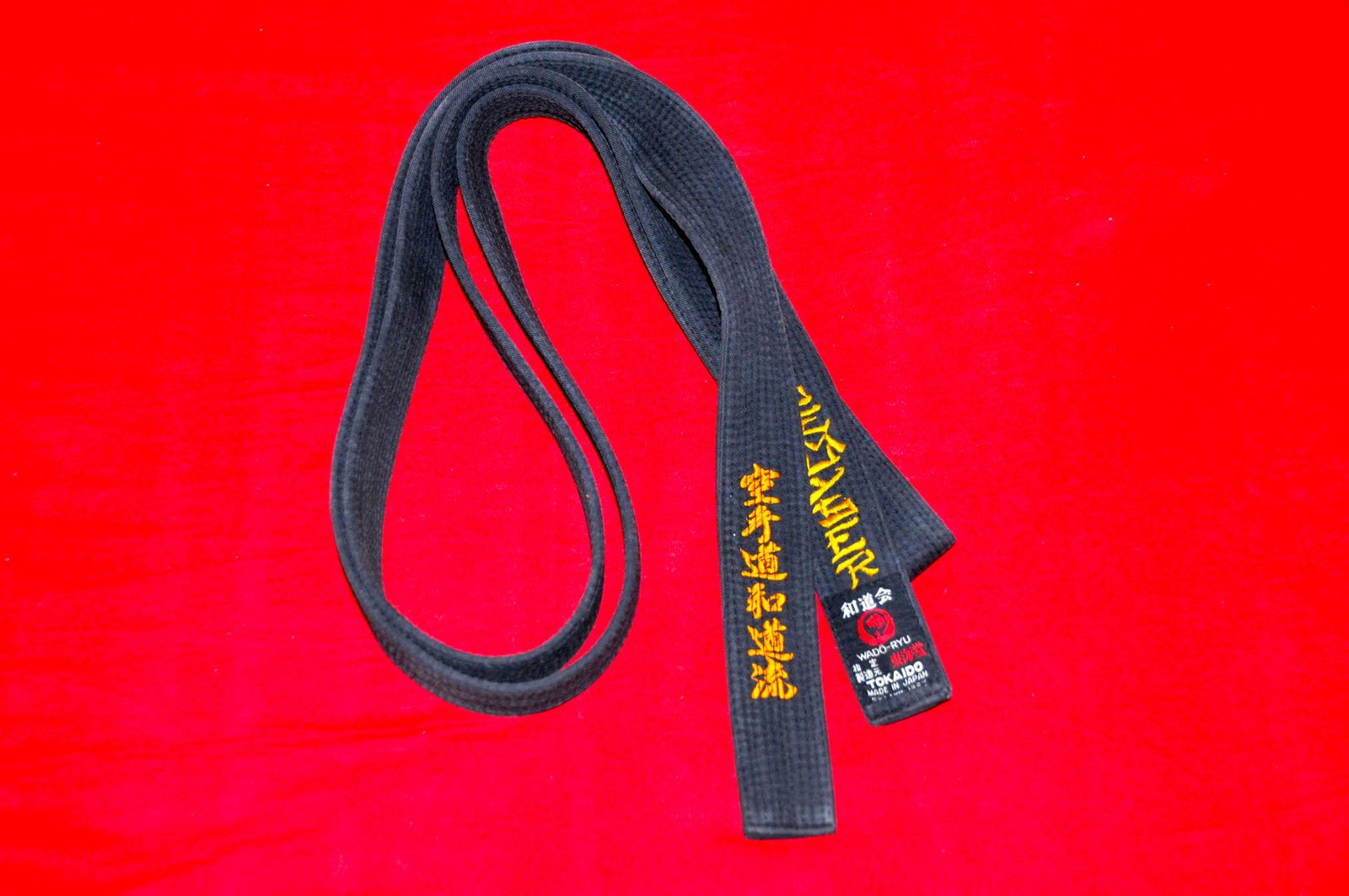
An embroidered black belt: GdML, CC BY-SA 3.0
Typical belt orders
| Art | Typical coloured belts | Black belt grades | Typical time to black belt |
|---|---|---|---|
| Judo | White, yellow, orange, green, blue, brown (varies by country) | 1st to 10th dan; red-and-white 6th to 8th, red 9th to 10th | Several years of regular training |
| Karate | White, yellow, orange, green, blue, purple, brown (varies by style) | 1st dan upward | Often 3 to 6 years |
| Taekwondo | White, yellow, green, blue, red (World Taekwondo style) | 1st dan upward; under-15s get poom grades | Often 3 to 5 years |
| Brazilian jiu-jitsu | White, blue, purple, brown (kids have extra colours) | Black, then red-and-black and red at the top | Often 8 to 12 years |
Related guides
Be wary of schools that promise a black belt in a fixed short time. Rank should reflect skill, consistency and character.
Shop
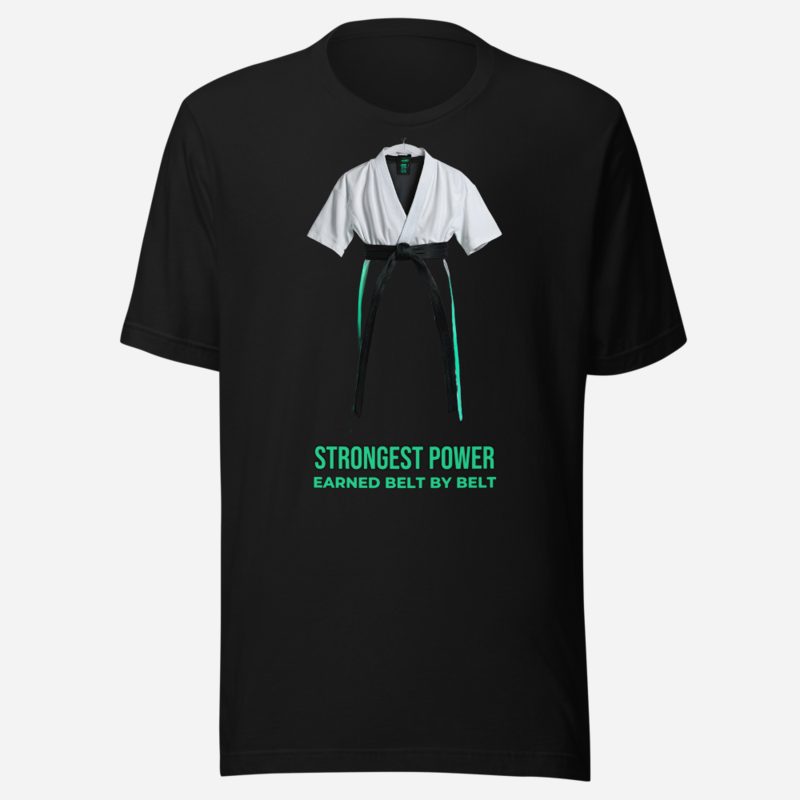
The Strongest Power collection
Tees and hoodies in the Strongest Power colors, printed to order in the USA. Use code VIP15 from the newsletter for 15% off your first order.




Sources
Facts on this page were checked against these sources (updated Oct 12, 2026). Spot an error? Email hello@fireempireshop.com.