Belt Ranks Explained
What every belt colour really means. Where martial arts belts came from, what kyu and dan grades mean, why masters wear red and white belts and how long a black belt takes.
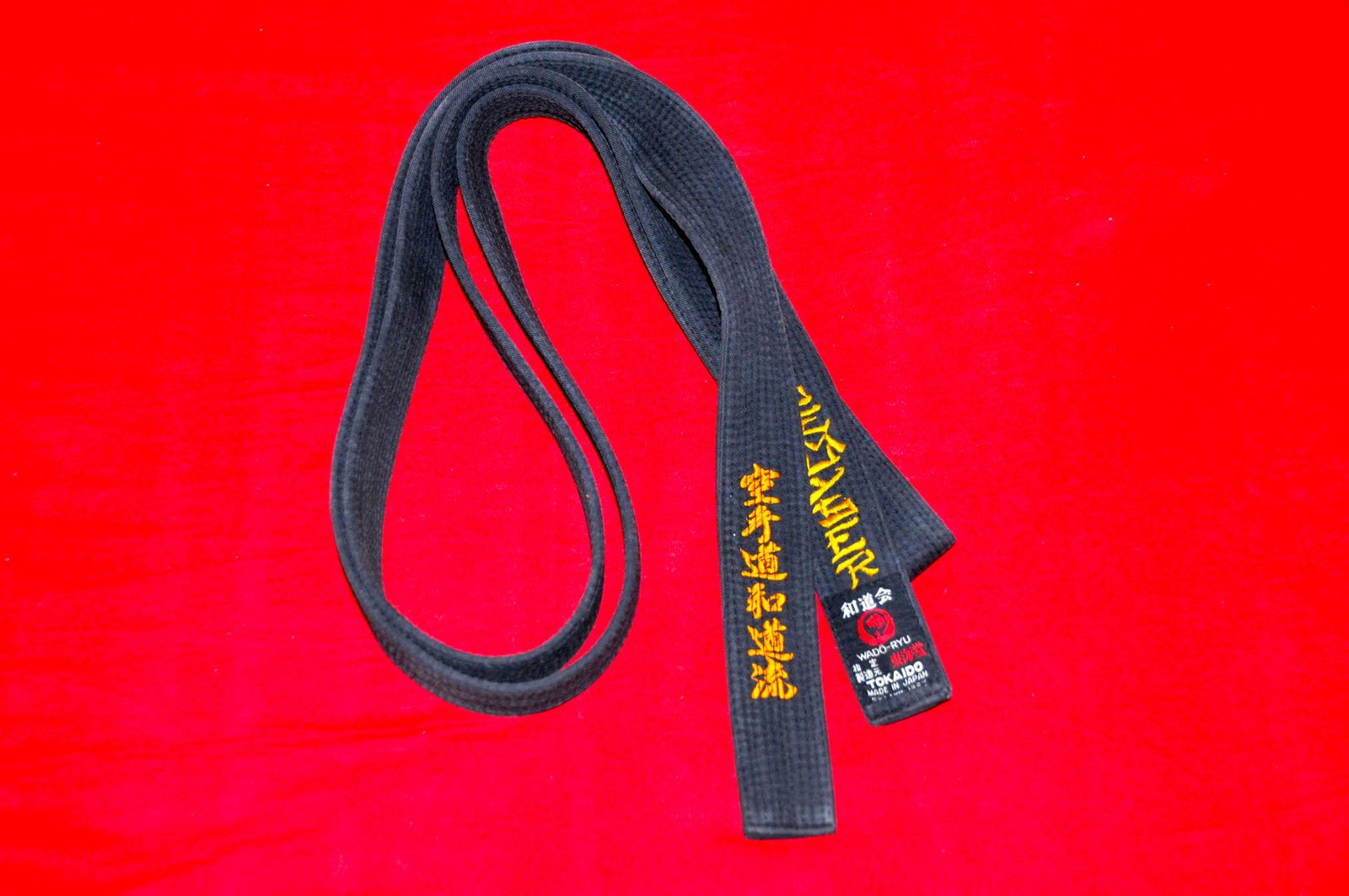
An embroidered black belt: GdML, CC BY-SA 3.0
Kyu, dan and where belts began
Coloured belts feel ancient, but they are a modern invention. Judo founder Jigoro Kano introduced dan grades in 1883, and soon afterwards his advanced students wore black belts to show their level. At first there were only two colours: white for students and black for graded experts.
Karate borrowed the system in 1924, when Gichin Funakoshi awarded his first dan grades in Tokyo. Taekwondo, jiu-jitsu, aikido and many other arts followed.
Most Japanese-style arts split ranks into two groups. Kyu grades are for students below black belt, and they count down, so a 5th kyu is less advanced than a 1st kyu. Dan grades begin at black belt and count up, from 1st dan, called shodan, to 10th dan.
Shodan literally means first step. A new black belt is not the end of learning, it means the basics are solid and real study can begin.
Where the rainbow came from
The bright colours between white and black, such as yellow, orange, green, blue, purple and brown, came later. Records from the Budokwai judo club in London show coloured belts in the 1920s, and judo teacher Mikinosuke Kawaishi helped popularise a full colour system after he began teaching in Paris in 1935.
Colours give students visible goals and keep beginners motivated. That is why the order varies between arts and even between clubs. In Brazilian jiu-jitsu, adults move through white, blue, purple, brown and black, with grey, yellow, orange and green belts used for children.
Red, white and the very top
In judo, holders of 6th to 8th dan may wear a belt with red and white panels, and 9th and 10th dans may wear solid red. Brazilian jiu-jitsu uses red and black, red and white and red belts for its most senior masters. Only fifteen people have ever been promoted to 10th dan by the Kodokan.
How long does a black belt take? It depends on the art, the school and the student, but several years of regular training is typical, and around ten years is common in Brazilian jiu-jitsu. A good school promotes for skill and character, never just for time or fees.
Grading day
Moving up a belt usually means passing a grading, a test in front of senior instructors. Students show basics, forms and controlled partner work, and examiners also look at attitude, effort and etiquette.
Failing a grading is normal and simply means more practice. Many teachers say the belt only holds up your trousers: the real reward is the skill and confidence earned along the way.
- An embroidered black belt: GdML, CC BY-SA 3.0
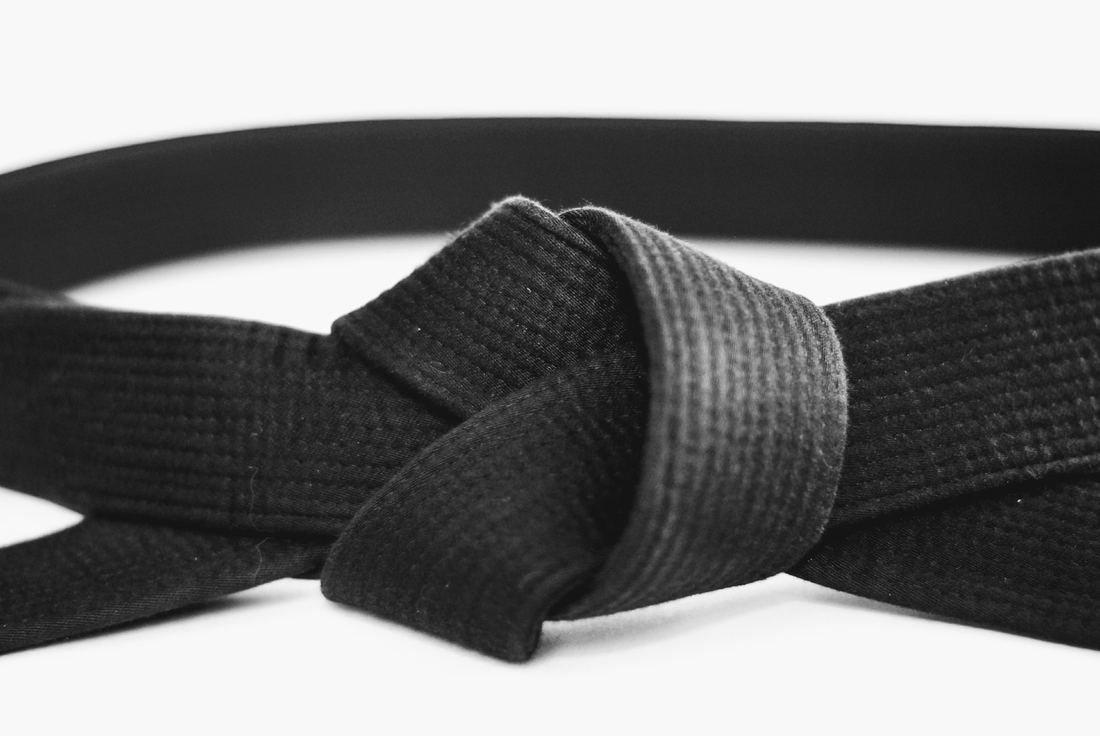
- A tied black belt: NainDeathlegs, CC BY-SA 4.0
Text written by Strongest Power.