Boxing
The sweet science. Boxing uses only punches and footwork. Its rules from 1867, amateur and Olympic boxing, weight classes, scoring and safety in the gym.
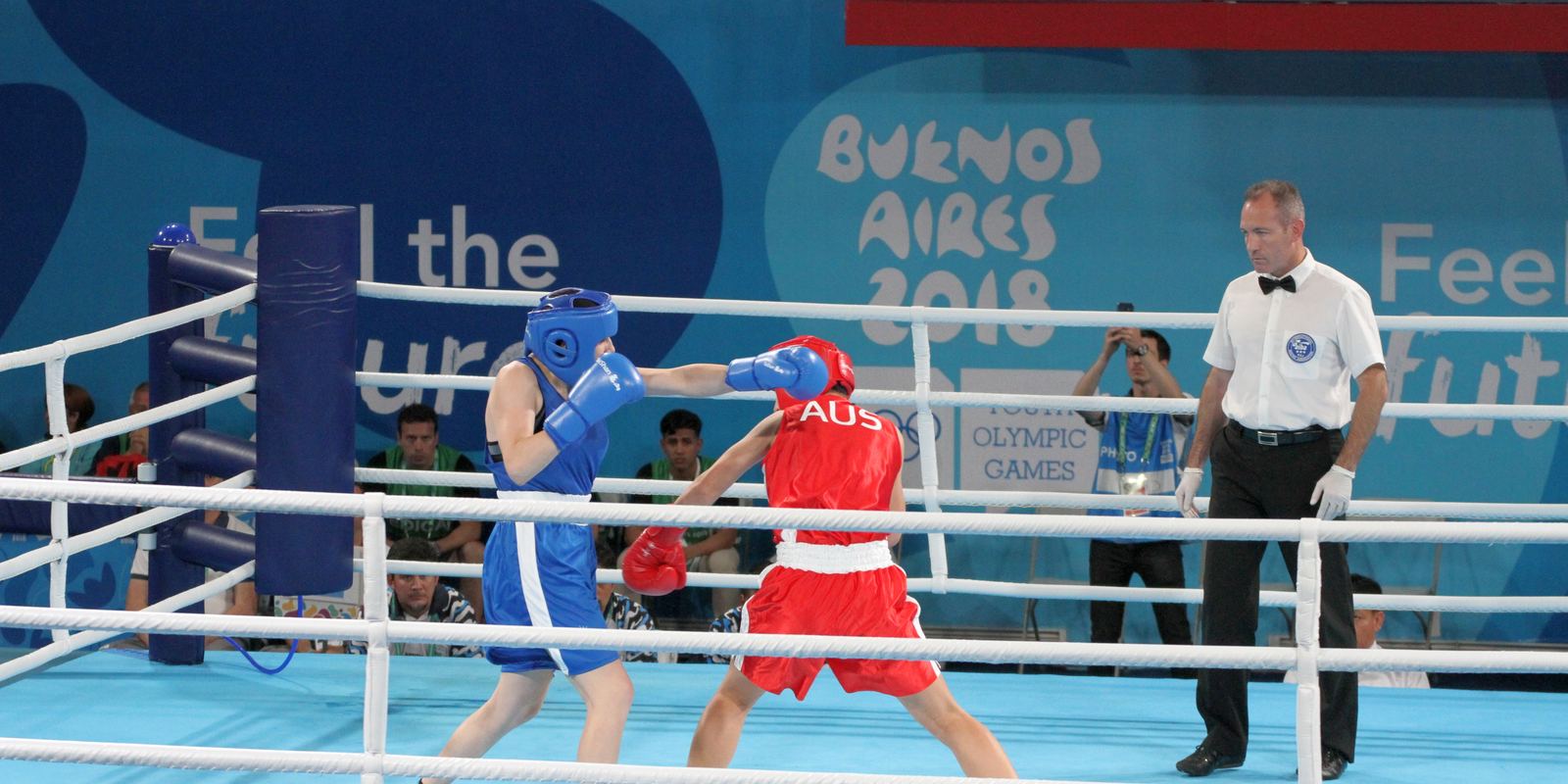
Youth Olympic boxing, Buenos Aires 2018: Marcus Cyron, CC BY-SA 3.0
From bare knuckles to gloves
Fist fighting is ancient, but modern boxing took shape in Britain. The Marquess of Queensberry Rules, published in 1867, required padded gloves, three-minute rounds with one-minute breaks and a ten-second count after a knockdown. These rules made the sport safer and more skilful, and they still underpin boxing today.
The four punches
Boxing has only four main punches. The jab is a fast, straight punch with the lead hand used to measure distance and set up attacks. The cross is a straight punch with the rear hand. The hook is a curved punch to the side of the head or body, and the uppercut rises from below. Combined with footwork, head movement and defence, these simple tools create endless strategy.
Amateur and Olympic boxing
Boxing has been on the Olympic programme since 1904, except for 1912, and women's boxing was added at London 2012. Amateur bouts are shorter than professional fights and scored by judges using the 10-point must system, where the winner of each round gets 10 points and the loser fewer. World Boxing has been recognised to run the sport for the Los Angeles 2028 Olympic Games.
Weight classes and pro boxing
Fighters compete in weight classes so bouts are fair. Professional boxing has many classes, from minimumweight to heavyweight, and several organisations award world titles, which is why a single weight class can have several champions. Pro fights can last up to 12 rounds for championships.
Boxing for fitness
Many people box without ever sparring. Boxing fitness classes use skipping, pad work, bags and conditioning. If you spar, wear a mouthguard, headgear where required and well-fitted gloves, and train with coaches who match partners carefully and keep contact light for beginners. Repeated head impacts carry real risks, so safety rules matter.
Learn techniques only from a qualified instructor in a supervised class, with proper equipment and a partner who knows what to expect.
- Youth Olympic boxing, Buenos Aires 2018: Marcus Cyron, CC BY-SA 3.0
Text written by Strongest Power.