Muay Thai
The art of eight limbs. Muay Thai, Thailand's national sport, uses fists, elbows, knees and shins. Its traditions, famous stadiums, scoring and how training works.
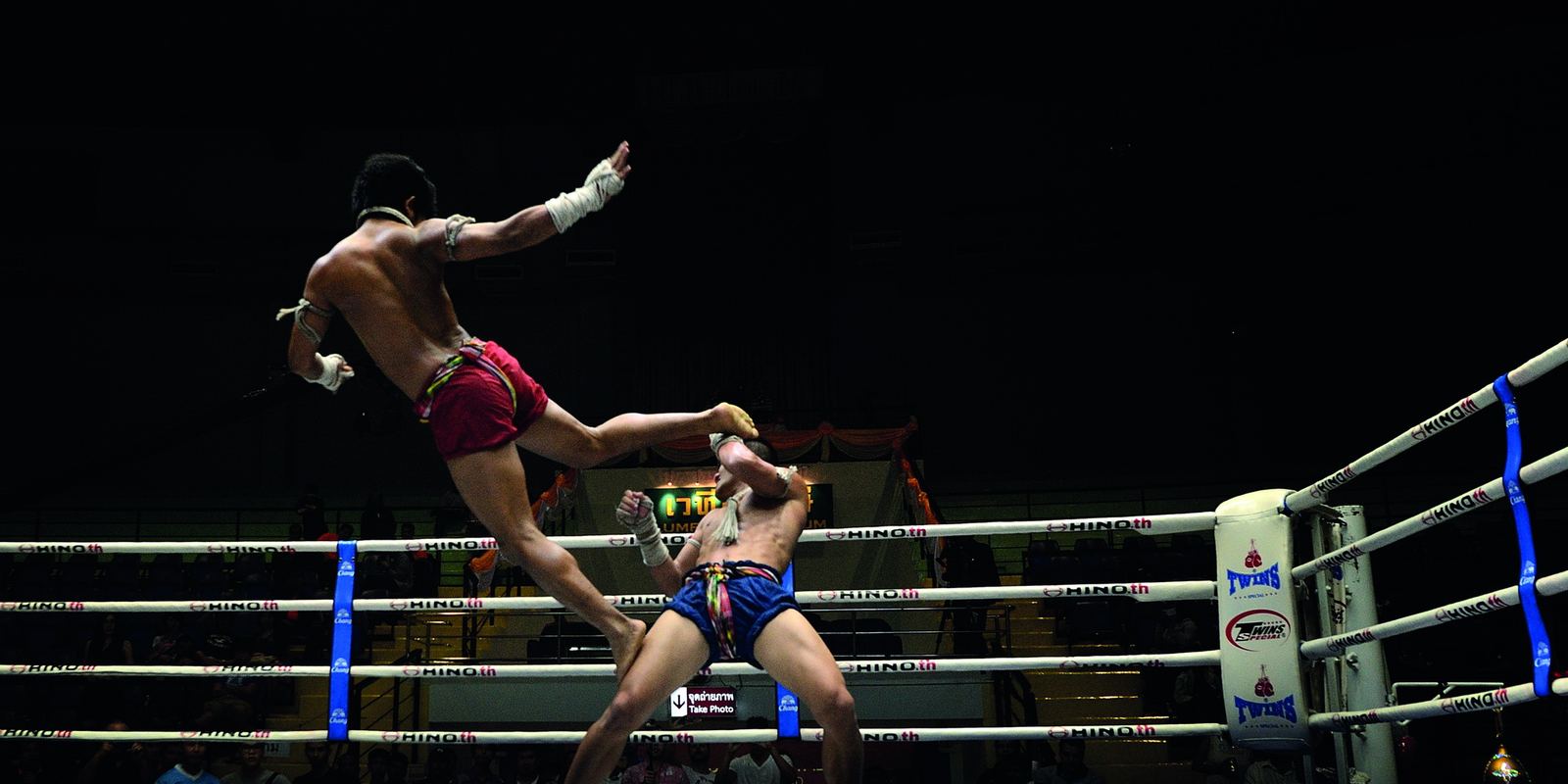
Lumpinee Boxing Stadium, Bangkok: Mr.Peerapong Prasutr, CC BY-SA 4.0
Eight limbs
Muay Thai is called the art of eight limbs because fighters strike with fists, elbows, knees and shins, eight points of contact compared with two in boxing. It also includes the clinch, close-range grappling where fighters control each other's neck and arms to land knees or off-balance an opponent. Powerful roundhouse kicks with the shin are its signature.
Traditions
Before a professional bout, fighters perform the wai kru ram muay, a slow ritual dance that honours their teachers and gym. Many wear a headband called a mongkol and armbands called prajioud, given by their trainers. Live music played on pipes and drums accompanies the fight and speeds up as the action intensifies.
Scoring and stadiums
Traditional Thai scoring rewards clean, powerful strikes that visibly affect the opponent, balance and control, and later rounds often matter more than early ones. Bangkok's Rajadamnern and Lumpinee stadiums are the most famous venues, and a title belt from either is a career highlight. The amateur sport, governed by IFMA, is recognised by the International Olympic Committee.
Training
Thai training camps are known for running, skipping, pad work with a trainer, heavy bags, clinching and sparring, often twice a day. Beginners in gyms worldwide learn the stance, basic kicks, teeps (push kicks) and blocks with the shin. Shin conditioning comes gradually from regular bag work, not from extreme methods. Muay Thai is a great workout for cardio, strength and flexibility.
Did you know?
Muay Thai fighters in Thailand often start competing young and may have dozens or even hundreds of bouts by their twenties, far more than boxers or kickboxers elsewhere. Many top Thai fighters take their gym's name as part of their ring name. National Muay Thai Day is celebrated in Thailand every year on March 17.
Getting started
Look for a gym that offers beginner classes, provides or recommends gloves, shin guards and mouthguards, and keeps sparring light and controlled for newcomers. Many students never compete and train simply for fitness and confidence.
Learn techniques only from a qualified instructor in a supervised class, with proper equipment and a partner who knows what to expect.
- Lumpinee Boxing Stadium, Bangkok: Mr.Peerapong Prasutr, CC BY-SA 4.0
Text written by Strongest Power.